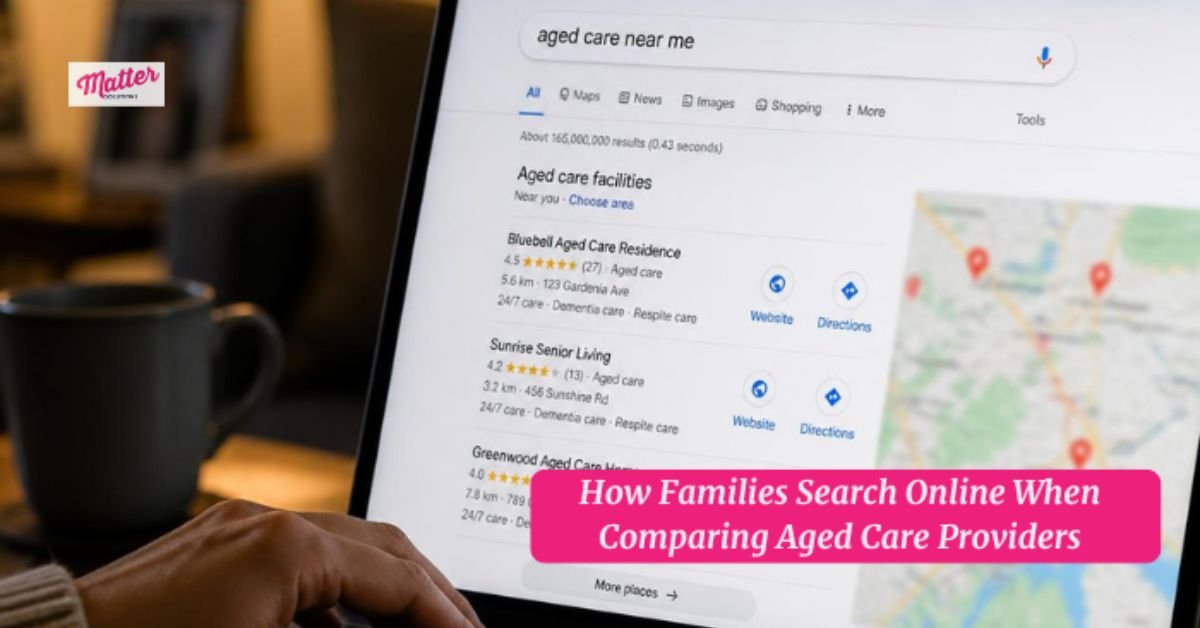
How Families Search Online When Comparing Aged Care Providers
When a family member starts needing extra help around the house, most people do what comes naturally. They open Google and type “aged care near me.” It feels like a reasonable first step.
What comes back, though, can be overwhelming. There’s no shortage of provider listings, comparison pages, and government portals all competing for your attention. On top of that, the aged care system here covers a broad range of support options, and older Australians often have very different care requirements.
At Matter Solutions, we’ve worked closely with aged care providers across Australia and seen firsthand how easily families get turned around during that first search. It’s a pressing concern, and one that doesn’t get nearly enough attention.
That’s why this article walks you through how families typically research their options online, what those results mean, and how to search with a clearer head.
What Families Type Into Google When the Aged Care Search Begins
Most families start with a location-based query long before they know what type of support they’re actually looking for.
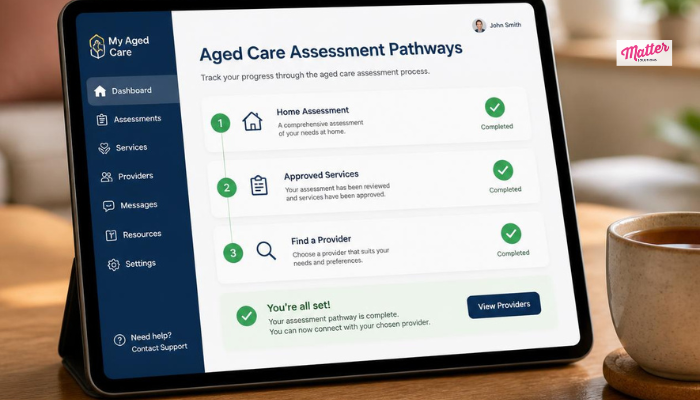
From there, the terms get more specific. Phrases like “home care services” and “residential aged care” start appearing in the search bar as people learn more about their options.
Honestly, the aged care system covers a lot more than a single Google search suggests. Some older Australians require personal care visits a few times a week. Others rely on full-time accommodation and around-the-clock supervision (two situations that sit at opposite ends of the care spectrum).
So naturally, the research journey looks different for every family.
Aged Care Services: What the Results Actually Show You
Getting clear on what aged care services exist saves families from going in circles online. The results page often mixes several different types of care together, and without some context, it’s hard to know where to start.
Here’s a breakdown of the two main service types you’ll come across: home care and residential aged care, plus where government funding comes in.
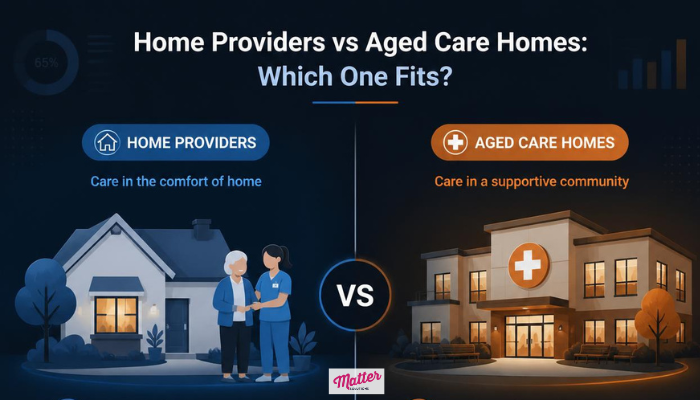
Home Providers vs Aged Care Homes: Which One Fits?
Families often land on both options in the same search session without realising they serve completely different levels of need.
First of all, home care lets older Australians stay in their own home while receiving scheduled visits from home providers. Those visits can cover personal care, meal preparation, and home modifications, depending on what the individual requires day to day.
Aged care homes, on the other hand, suit those who depend on full-time support and can no longer live independently. These facilities provide accommodation, meals, and continuous medical supervision (a significant step up from part-time support).
Not every case fits neatly into either category, though. Some people are beyond a few visits a week but aren’t at the stage of full-time facility care. If that sounds like your mum or dad, speak directly with a care assessor before committing to any one option.
How the Commonwealth Home Support Program Works in Practice
The Commonwealth Home Support Program is government-funded, entry-level support that helps older Australians remain independent at home longer. It’s often the first formal step in accessing aged care services, yet most families struggle to find a clear explanation online.
It covers a practical range of services for eligible people, including:
- Personal care and grooming
- Domestic assistance and cleaning
- Home modifications for safety
- Transport to appointments
Keep in mind that you’ll need a formal assessment before accessing any of these services. An assessor visits your loved one at home and works out what level of care suits their unique circumstances (skipping this step isn’t an option).
After that assessment, you can apply through the My Aged Care website or by calling 1800 200 422. Once approved, eligible individuals connect directly with local home providers who deliver the agreed support.
Now, let’s look at where families go wrong when they start comparing providers.
Comparing Aged Care Providers: Where Most Families Go Wrong
Comparing providers looks easy from the outside. Most families pull up a few pages, skim some reviews, and start making calls. The problem is that approach tends to miss the things that actually determine the quality of care.
Three missteps come up again and again:
- Leading With Price Alone: Cost is worth checking, but starting there means you’ll likely overlook staff consistency, accreditation history, and how well a provider meets individual care requirements. The reality is, two providers can charge similar rates and deliver very different experiences on the ground.
- Relying on Unverified Reviews: Reviews for aged care homes can be outdated, sparse, or heavily curated by the providers themselves. So a single star rating on one page rarely reflects how they actually perform across their broader community of clients.
- Skipping the My Aged Care Website: Many people head straight to Google and overlook the My Aged Care website entirely (that’s a close call no family wants to make twice). That site is the most reliable starting point for checking complaint history, care standards, and available services in your area.
From what we’ve seen working with aged care providers on their digital presence, the gap between how a provider appears online and how they operate is a pressing issue. And most families only discover that gap after they’ve already made contact.
What the New Aged Care Act Means for Your Search
The New Aged Care Act 2024 changed the rules across the entire aged care system, and not in a small way.
For a long time, regulators largely assessed providers on whether they ticked the right boxes on paper. But that shifted a lot recently. The focus now sits firmly on the older person:
- Wellbeing
- Independence
- Whether the care actually fits their life
That means every provider now has to show they’re delivering care built around the individual, rather than a general package that suits the majority.
The Act also changed how providers report on care quality and how they handle complaints. That means comparing options today gives you access to far more useful information than families had even a couple of years ago. It’s a wake-up call for providers, too. And the good ones have already adjusted.
Knowing what to look for is one thing. The right local provider is where that knowledge pays off, and that’s exactly what we’ll cover next.
Finding Aged Care Near Me: A Better Way to Search Locally
If you’re typing “aged care near me” into Google, you’re already one step ahead. The next move is filtering those results down to what fits. The table below breaks down the most common search approaches families use, and what each one returns:
| Search Method | What You Get | Best Used For |
| “Aged care near me” | Broad mix of home care and residential providers | Getting an initial feel for local options |
| My Aged Care website | Verified provider profiles, accreditation, and cost info | Comparing aged care services side by side |
| Direct provider website | Service range, pricing, contact details | Narrowing down 2-3 shortlisted providers |
| Phone enquiry | Real answers, specific support services available | Confirming fit before visiting |
Each step moves you closer to a decision, and skipping straight to phone calls before doing some groundwork usually means going back to the start.
Your Next Step Doesn’t Have to Feel Overwhelming
Finding the right aged care support for someone you love is rarely a quick process. Most families come into it with high hopes, a long list of questions, and not much clarity on where to begin. That’s completely normal, and the confusion does clear up.
One step at a time is honestly the best approach here. Start by understanding what level of care your mum, dad, or loved one requires. From there, learn what programs and local providers are available in your area before making any calls. In the long run, that groundwork saves a lot of back-and-forth, and you’ll ask far better questions when it counts.
Matter Solutions has spent years in the aged care space. We know what families like yours are up against when the search begins. So reach out today for an honest conversation.